Quick Links to Explore Our History

🚢 Sinking of the HMS Courageous

Learn about the tragic sinking of the HMS Courageous during World War II and its impact on the local community.

View Details

👫🏻 Life in Shotteswell

Explore the rich history of daily life in Shotteswell, including local tales and historical anecdotes.

View Life in Shotteswell

🎖️ War Heroes

Discover the stories of local heroes who served in the armed forces during times of conflict.

View Heroes

⛪️ St Laurence Church

Learn about the history and significance of St Laurence Church in Shotteswell.

View Information

📸 Pictures from the Past

Explore our collection of historical photographs showcasing Shotteswell’s rich heritage.

View Gallery

🎠 Banbury’s Michaelmas

Learn about the history and traditions of Banbury’s Michaelmas fair.

View Information

🦴 Archaeological Discoveries

Learn about the archaeological discoveries made in and around Shotteswell, shedding light on its ancient history.

View Information

🛩️ Wellington BK261 Crash

Learn about the tragic crash of the Wellington BK261 bomber and its impact on the local community.

View Information

History of the Name ‘Shotteswell’

The modern name Shotteswell seems to derive from the old English words “Scota” or “Sceota,” meaning “offshoot” or “brow of a hill,” with the word “well” added. The name has been spelled in the past in various ways, most commonly “Cheteswell” and “Sacheswell.” Old inhabitants sometimes refer to the village as “Satchell,” hinting at the historic spelling or local accent.

The neighbouring village of Warmington, two miles further north, is mentioned in the Domesday Book with a very large area of land. It would seem that the present parish of Shotteswell was part of Warmington at that time.

The first Lords of the Manor to be named were the Earls of Warwick. At one time, the Earl granted sub-lordship to the ancestors of John de Dive, followed by Robert Fitzworth in 1352, and later, during the reign of King John, by the family of the Manards. References exist to gifts of six cottages by the Earl of Warwick to the Canon of Studley and another to the Canon of Clattercote, although undated. During the reign of Henry VIII, Sir Thomas Pope became owner of the lands given to the monks of Studley and Clattercote, later obtaining possession of the Manor and Living. This was the same Sir Thomas Pope who founded Trinity College, Oxford, and became owner of Wroxton Abbey.

The Parish of Shotteswell

The Milestone

The Milestone

The Parish of Shotteswell lies on the extreme south-easterly edge of the County of Warwickshire forming a peninsula and is surrounded on three sides by Oxfordshire. The parish comprises 1,305 acres, mostly rich agricultural land farmed by men who live in the village. The village itself lies on the east slope of a small range of hills that runs north from Banbury, about 16 miles from Warwick, just off the B4100. The village boasts some extensive and beautiful views over the valley.
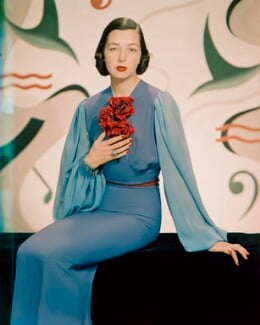
Notable Residents: The Profumo Family

Elizabeth Profumo

Elizabeth Profumo
Image © National Portrait Gallery,
London

The Profumo family had significant connections to the Shotteswell area during the mid-20th century. John Profumo was the 5th Baron Profumo; his father, an Italian Baron and King’s Counsel, emigrated to the UK in 1885 and built his fortune on insurance. John served as the Conservative Member of Parliament for Stratford-on-Avon, rising to the ranks of Minister for War.

John Profumo was married to the very glamorous film actress Valerie Hobson, who starred in films such as The Bride of Frankenstein (1935), Great Expectations (1946), and Kind Hearts and Coronets (1949). Together, they were a prominent couple in both political and social circles of post-war Britain.

John Profumo’s sister, Elizabeth Profumo, lived in the village at one of the two Profumo homes, Mount Stuart and Cherry Lodge. John was a regular visitor, even though the family home was at Avon Carrow at Avon Dassett. When Miss Profumo died, the funeral service was held here in St. Laurence Church and her body was later taken to London for internment.

The Profumo Scandal and Shotteswell (1963)

In 1963, Shotteswell was suddenly embroiled in the infamous Profumo scandal when the press besieged the village searching for John Profumo. Following the discovery of the Christine Keeler affair, which proved a heady mixture of intelligence secrets, sex, and the aristocracy, the Minister for War resigned as M.P. and fled from London.

The reporters descended on Shotteswell because of the connection to his sister Elizabeth’s home. The disgraced M.P. then devoted his time to charitable and philanthropic works, and in recognition of this service, he was awarded the CBE.

As time went by, he was seen to have been forgiven, having done the honourable thing and resigned; he was even invited to Margaret Thatcher’s 70th birthday celebrations and seated by Her Majesty Queen Elizabeth II, signalling his return to public respectability.

The Manor and Lords of the Manor

The Manor

The Manor

The first Lords of the Manor to be named were the Earls of Warwick. At one time, the Earl granted sub-Lordship to the ancestors of John de Dive. He was followed by Robert Fitzworth (1352) and later, in the reign of King John, by the family of the Manards.

Lords of the Manor

Early Period
The Earls of Warwick

The first named Lords of the Manor

Medieval Period
John de Dive

Granted sub-Lordship by the Earl of Warwick

1352
Robert Fitzworth

Succeeded John de Dive as Lord

Reign of King John
The Manard Family

Later Lords of the Manor

Reign of Henry VIII
Sir Thomas Pope

Founder of Trinity College Oxford and owner of Wroxton Abbey

The Coronation Tree in Shotteswell

The Manor passed to the North family, who have since sold properties within the village. Lord North planted the Coronation Tree (horse chestnut) at the junction of Middle Lane and Coronation Lane to commemorate the coronation of King George V in June 1911.

Religious Connections

There is reference to a gift of six cottages by the Earl of Warwick to the Canon of Studley, though the reference is undated. Another gift by the Earl of Warwick to the Canon of Clattercote is also mentioned but similarly undated.

The Dissolution of the Monasteries

During the reign of Henry VIII, Sir Thomas Pope became the owner of the lands previously given to the monks of Studley and Clattercote. He later obtained possession of the Manor and the Living.

This was the same Sir Thomas Pope who founded Trinity College Oxford and became the owner of Wroxton Abbey.

The Avon

The Avon, a tributary of the Cherwell, separates the parish from Oxfordshire on the east, as does another small tributary on the west. The northern boundary is defined by an even smaller stream. The cottages and farms in the village are mainly constructed of ferruginous limestone—known as Hornton Stone. The stone ranges in color from warm light brown through brown-purple, grey, green, and even shades of mauve and blue. Noted for its hard-wearing properties and ease of working, Hornton Stone has been admired and used by architects and artists for centuries. Very few cottages remain thatched today; most of the original buildings are clustered around the church, forming steep and narrow lanes.